TYSON Review





Mike Tyson once seemed like the most dangerous man on the planet. Decades later, he's a podcast host, a movie cameo regular and the man who drew a record audience when he climbed back into the ring with Jake Paul in 2024 at age 58. Netflix calls that bout the most-streamed live sporting event ever. Now the streamer has packed his whole life into TYSON, a four-episode limited documentary that arrived on October 13, 2026, all at once.
It runs about four hours and 23 minutes, rated TV-MA, and Tyson himself sits at the center of it. Here's what the series gets right, where critics think it pulls its punches and how to decide if it's for you.
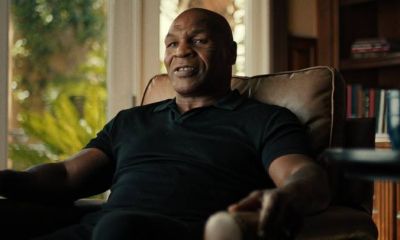
The man in the chair
Tyson agreed to long interviews for the project, and he framed his reasons in an unusually self-aware way. "Most people are too scared to look at their lives objectively, wanting to paint themselves as the hero of their own story," he said when Netflix announced the series.
He isn't calling the shots behind the scenes, though. According to The Hollywood Reporter, he's not an executive producer. The director is Floyd Russ, best known for Netflix's Untold sports series and American Manhunt: The Boston Marathon Bombing. Bill Simmons and longtime boxing broadcaster Jim Gray are among the producers.
A life in four chapters
Each episode has a one-word title, and together they read like a summary of his life.
The opener, "Power," goes back to Brownsville, where Tyson had already been arrested several times by age 13. It follows him to Cus D'Amato, the trainer who took him in and turned him into a fighter. The second episode, "Greed," picks up after his rise to the top, when his first marriage, a powerful promoter and his own habits began to drag him down.
"Trust" covers the fall: a stunning loss, a push to reclaim the belt and then a criminal conviction and prison sentence. The finale, "Human," starts after the night he bit Evander Holyfield's ear and follows him through retirement and recovery, all the way to the Jake Paul fight.
I would call that last title the boldest choice in the series. Ending on "Human" makes a clear argument about who the filmmakers think Tyson is today.
Faces from the past
The interview list goes well beyond Tyson. Lennox Lewis and Buster Douglas, two men who beat him, both sit down on camera. So does Rory Holloway, his former manager. His children appear, along with friends from his childhood and partners from his early gym days. Commentator Van Lathan is here too, and Donald Trump appears to speak up for him.
Two people are notably absent. His first wife, Robin Givens, doesn't take part. Neither does Desiree Washington, who was the victim in the rape case that led to his 1992 conviction.
The conviction, and the questions left hanging
The third episode covers the 1992 conviction and his time in prison. Netflix promises "an unflinching look at the triumphs, controversies, and personal cost" of his life. Critics aren't convinced it fully delivers on the hardest part of that promise.
The Hollywood Reporter found Tyson "candid and emotionally raw one moment, stubbornly and annoyingly evasive the next." Absolute Geeks was blunter, writing that he "ducks hard questions like a pro."
That matters. A series this reliant on its subject's own telling will always have limits, and without Washington's perspective, the account of that chapter comes mostly from one side. And there was a real person at the center of that case, whose voice is missing here.
The fights that made the legend
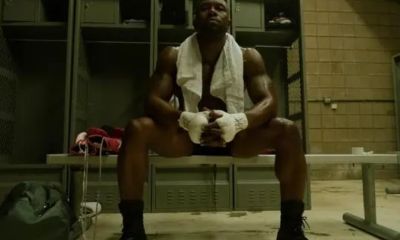
For boxing fans, the sports history is the strongest part. The series traces how D'Amato shaped his style and how Tyson became heavyweight champion at just 20. He held the undisputed title from 1987 until 1990.
Then came Tokyo and Buster Douglas, one of the greatest upsets the sport has ever seen. Douglas tells his side in the series, and Absolute Geeks called his segment "the emotional high point of the whole series." Few documentaries get to hear the underdog's version of a night like that.
The 1997 Holyfield rematch, the one that ended with the bite, gets its own spotlight too, as a turning point that led into his long, uneven second act.
What critics are saying
Reviews are split. The Hollywood Reporter called the series "as erratic as its subject," a line that sums up both its energy and its uneven moments.
The Telegraph's chief complaint was the length, arguing that it runs "far too long." With four episodes topping an hour each, it's easy to see how some viewers might feel it could have been tighter.
Where critics agree is on the boxing material and the voices of those who knew him early on. The Douglas episode in particular keeps coming up as a highlight.
Why we keep watching Tyson
Tyson's public image has changed more times than almost any athlete's. In the 1980s, he was terrifying. In the 1990s, he became a warning. By the time he showed up in The Hangover, he'd turned into a lovable oddball. And in 2024, he was a heavyweight again.
That arc is why the series is so watchable, and why it's also so tricky. Every chapter asks viewers to weigh how much of the change is real. The docuseries lets Tyson argue that it is. Whether you buy it is up to you.
Is it worth the four hours?
Boxing fans should press play. The history is rich, the interviews are rare and the Douglas material alone may justify the time.
Viewers hoping for a tough investigation into the darkest parts of his story should go in with lower expectations. Critics say the series doesn't push him as hard as it could.
I'll admit the format helps. Four separate chapters make it easy to watch one at a time, and that's probably the best way to approach it, giving each part of his life room to sink in.
So take it slowly, keep both the champion and the harm he caused in view and decide for yourself how much of the story you believe.
Pros
- Captivating narrative that blends archival footage with modern cinematography.
- Deep emotional introspection that reveals Tyson's inner struggles and vulnerabilities.
- Visually stunning with a carefully curated color palette and smart editing.
- Non-linear storytelling that keeps the audience engaged and provokes thought.
- A balanced commentary on celebrity culture and the pressures of high-profile careers.
- Widely accessible on multiple streaming platforms with options for offline viewing.
Cons
- Non-linear narrative can be confusing for viewers expecting a straightforward biographical account.
- The raw and intense emotional content might be overwhelming for some audiences.
- Pacing may seem slow and require patience from viewers accustomed to more conventional documentary styles.
Screenshots