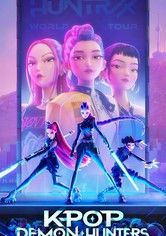
K-Pop Demon Hunters Review



K-Pop Demon Hunters arrives like a dare, then turns into a dare answered. It is one of those gleefully overstuffed movies that understands the current cultural moment better than it understands restraint, and that is precisely why it works. The film takes two sensations that already live on a hypercharged edge, K-pop and supernatural action fantasy, and fuses them into something loud, glossy, and much smarter than its candy-colored surface suggests. As an experienced film enthusiast, I went in expecting a novelty. What I found instead was a sharply engineered crowd-pleaser that knows how to weaponize style, identity, and pure pop momentum.
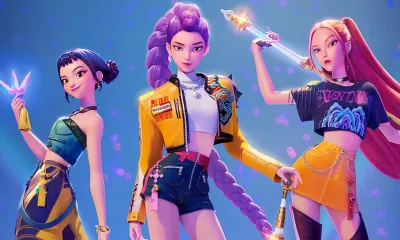
At its core, the film follows a K-pop group whose public image is immaculate and whose private lives are anything but calm. Fame, as the movie sees it, is a kind of haunting: every performance is haunted by pressure, every friendship by competition, every chart milestone by the fear of irrelevance. The “demon hunter” premise is not just a gimmick, though the movie is smart enough to know that a good gimmick can carry an entire feature if it is treated with conviction. Here, it becomes a full metaphor for the price of polish, the violence of expectation, and the strange double life of anyone who must be adored by millions while barely knowing themselves.
A film that understands pop as combat
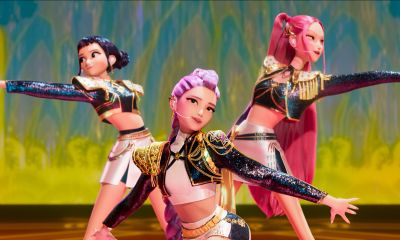
The best thing about K-Pop Demon Hunters is that it never treats its musical world as decoration. So many films borrow the surface of pop culture and never really feel its pulse. This one does the opposite. The dance breaks, stage lighting, color design, costume changes, and fan-chant energy are all integrated into the storytelling. In this universe, a choreography sequence can function like tactical maneuvering, and an album rollout can feel as suspenseful as a midnight stakeout. That is an inspired choice, because it lets the movie find action grammar inside the pop machine itself.
The result is a film in which performance and peril become inseparable. When the group is on stage, the camera practically worships them. When they are alone, the film lets the glamour crack in telling ways. It has the instincts of a backstage drama, the pace of a fantasy adventure, and the surface sheen of a music video compilation, yet it rarely feels fragmented. The transitions between these modes are smooth because the movie commits fully to its own logic. It does not ask for permission to be excessive; it simply is.
Visual invention with a playful edge
Visually, the movie is a feast. The palette moves from neon candy to infernal reds and bruise-like purples, with each environment designed to reflect the emotional temperature of the scene. The production design deserves special mention for how it contrasts the idealized world of idols with the unruly, shifting spaces of the supernatural plot. Concert venues gleam like temples, while the demon realm feels both ancient and Instagram-filtered in the strangest possible way. That tension gives the movie a distinctive texture: sleek on the outside, messy underneath.
What I appreciated most was the way the film resists visual sameness. Each set piece has its own rhythm, palette, and spatial idea. A rooftop confrontation looks and feels different from a backstage ambush, which in turn differs from a high-energy stage performance where the choreography itself becomes a form of defense. This variety keeps the film from sinking into monotony, which is especially important in a story that juggles myth, satire, action, and celebrity drama all at once. It is easy for movies like this to smear into one continuous blur of effects. Here, the imagery stays legible and expressive.
The humor lands because the movie respects its own absurdity
The script has a wry, knowing quality that keeps the material from becoming too self-serious. Its comedy comes from contrast: the grandness of supernatural stakes colliding with the carefully managed crises of idol life. There are moments when the movie glances at the machinery of fandom, branding, and image control with a healthy dose of side-eye, and those beats are among its strongest. It recognizes that pop stardom is already a kind of fantasy, so adding demons only makes the metaphor more obvious.
Importantly, the jokes are not merely there to puncture tension. They also reveal character. A sarcastic line under pressure, a too-perfect media answer, an exhausted backstage aside: these details create a living ensemble rather than a collection of archetypes. The film's sense of humor is broad, but it is not lazy. It understands timing, and it knows when to step back and let awkwardness do the work. That restraint keeps the satire from becoming smug.
Character work that sneaks up on you
What makes K-Pop Demon Hunters more than a flashy concept is its emotional undercurrent. The film knows that a group dynamic can be fertile territory for storytelling if the members are allowed to want different things. Professional unity is easy to sell; emotional unity is harder, and the movie wisely makes that tension central to the experience. The characters are caught between collective identity and private need, and that friction gives the story its pulse.
The most effective scenes are often not the largest ones. A quiet exchange after a performance, a sideways glance in a dressing room, a conversation interrupted by the demands of the industry: these moments carry real weight because the film understands how little privacy such characters are allowed. The supernatural plot functions as external pressure, but the deeper drama is internal. The movie is about trust, control, vulnerability, and the strange loneliness of being constantly watched.
There is also a subtle but important theme of self-authorship. The group is expected to perform a version of themselves that satisfies others, yet the film repeatedly pushes them toward defining their own terms. That narrative thread gives the movie a stronger emotional spine than the premise alone would suggest. It’s not just about surviving demons; it’s about deciding who gets to name your identity in the first place.
Music as narrative propulsion
Any review of this film has to address the music, because the soundtrack is not an accessory; it is the engine. The songs do more than energize a scene. They create structure, deepen theme, and sharpen character relationships. Some tracks function like declarations of power, while others feel like confessions disguised as spectacle. Even when the lyrics are doing heavy lifting, the film never feels clumsy about it. Instead, it treats the musical numbers as emotionally functional, which is the right choice for a story this ambitious.
The sound design deserves recognition too. Beats, bass drops, crowd noise, and supernatural sonic cues are blended in a way that makes the film feel alive. The music does not merely accompany the action; it drives the pacing and magnifies the stakes. In the hands of a lesser movie, this could have become repetitive. Here, the soundtrack evolves with the story, and that’s crucial. It helps each big sequence feel earned rather than simply loud.
Where the film stumbles, and why that barely matters
If there is a limitation to K-Pop Demon Hunters, it is that its ambition occasionally outpaces its emotional bandwidth. The film has so many ideas, and so many stylistic flourishes, that a few transitions feel compressed. Certain supporting dynamics could use more breathing room, and the mythology sometimes seems designed to serve momentum rather than full exposition. But this is a movie that prefers velocity to tidiness, and I found that trade-off mostly worthwhile.
Some viewers may also find the tonal blend a little too elastic. The film moves from satire to sincerity to spectacle with almost reckless confidence. Yet that volatility is part of its identity. It behaves like a glossy pop album where every track is a different mood but the overall sonic world still holds. Rather than smoothing the edges, the movie leans into its contradictions, and that is what makes it memorable.
Final verdict
K-Pop Demon Hunters is not simply a fun diversion, though it is certainly that. It is a sharp, exuberant reminder that genre mashups work best when they are built around a clear emotional truth. This film sees the pop industry as both fantasy and battlefield, and it transforms that insight into a vivid, frequently intoxicating ride. It is stylish without being empty, funny without being shallow, and emotionally aware without becoming ponderous.
As a reviewer, I admire how confidently it commits to its unusual identity. As a viewer, I enjoyed how often it surprised me. The movie understands timing, image, and performance at a level that lets it play with the audience rather than merely entertain it. For anyone looking to watch a film that feels both current and creatively unafraid, this is one to stream as soon as it becomes available on the right platforms. It is the rare title that feels built for enthusiastic conversation, repeat viewing, and the kind of online discourse that follows a genuinely distinctive hit.
How to watch K-Pop Demon Hunters online
Availability & Access: K-Pop Demon Hunters is a newly positioned title and may not yet be widely available to free users. Check major platforms to stream, rent, or download once it appears in your region. If it lands on a subscription service, offline viewing may be offered through the app; otherwise, purchase or rental will likely be the fastest way to watch online.
Age Rating (US-based): The appropriate American age classification is PG-13, due to stylized violence, intense fantasy action, and thematic material that may not be suitable for younger viewers without parental guidance.
Netflix: Availability depends on licensing in your country. If it arrives on Netflix, it will generally be included with a subscription, with download access available in the mobile app for supported titles. Free trial offers are uncommon now, so check current account options.
Amazon Prime Video: The film may be available to rent or purchase if not included in the Prime catalog. Prime members sometimes get offline access for eligible downloads, and non-members can usually buy or rent without a subscription.
Apple TV: Apple TV typically offers this kind of release as a rent or purchase option in high quality. Downloads are available through the Apple TV app after purchase or rental, subject to device limits.
Peacock: If available on Peacock, it would most likely sit behind a premium plan rather than the free tier. Download access is usually limited to paid subscribers on supported devices.
Hulu: Hulu availability varies by deal and region. If listed, it would require a subscription, and download options are generally limited to eligible plans and devices rather than free access.
YouTube (Movies): You can often rent or buy films here without a subscription. Downloads are available through the YouTube app for offline viewing on supported mobile devices, but not as an unrestricted free file.
Pros
- Strong fusion of K-pop spectacle and supernatural action
- Visually inventive with vibrant color design and dynamic set pieces
- Music is integrated into the story rather than acting as simple background
- Humor lands well and supports the film’s satirical tone
- Character dynamics give the movie emotional weight beyond the premise
- Themes of identity, pressure, and self-authorship are handled effectively
Cons
- The film sometimes moves too quickly for certain story beats to fully breathe
- Some supporting characters and mythology could use more development
- The tonal shifts between comedy, sincerity, and action may feel uneven to some viewers
Screenshots