Collision Course Review




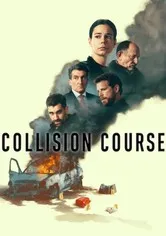
In 2013, Spain was deep in an economic crisis. Unemployment was high, and plenty of ordinary people felt the system had failed them. That's the world Collision Course drops you into. The Spanish film, titled Colisión at home, follows a bank robbery in Madrid that goes wrong in more ways than one.
It reached Netflix worldwide on October 30, 2026, and quickly became one of the most-watched films on the platform. It also became one of the most debated. Some critics call it clever and gripping, while others think it's all twists and no substance. Here's a breakdown to help you decide where you'll land.
Robbery first, questions later
The heist happens right at the start. A crew storms a bank, takes what they came for and runs. Rotten Tomatoes' synopsis hints at what follows: "After robbing a bank, a getaway crash reveals the hidden side of each thief."
From that point, the film becomes less about money and more about the people in the car. Netflix's description promises "a game of deception, fear and survival, where every decision matters, every gesture conceals something and everyone is trying to escape from more than just prison."
The crisis setting isn't just a backdrop. Javier Ocaña at El País wrote that the social context "is well-crafted, even incorporating humor and social nuances (gambling addiction)." The desperation of the era helps explain why these characters made the choices they did.
A story that refuses to stay put
What makes the film stand out is its structure. Without spoiling anything, it doesn't tell one version of events. Shashikant Saurav at K-waves and Beyond described it as showing "multiple scenarios regarding the same collision between these characters."
That approach changes how you see each person. Charles Hartford at But Why Tho? noticed the effect: "In some versions, a character comes across as awful; in another, they garner more sympathy." Saurav liked that too, writing, "Every scenario gives us another chance to get to know the characters."
Ocaña compared the style to Run Lola Run and Before the Devil Knows You're Dead, according to Wikipedia's summary of his review. If either of those is a favorite, this one is worth a look.
The faces behind the masks
Laia Costa leads as Carla. Karra Elejalde plays Pedro, with Tamar Novas as Tomás and Álvaro Cervantes as Raúl. Luis Zahera plays Ernesto, the bank manager, and Lluís Homar appears as Luis.
Hartford was impressed by how the cast handles the format. "It is genuinely impressive how the actors manage to present several different versions of their characters," he wrote. Playing the same person in shifting circumstances is no small task, and the actors seem to relish it.
Supporting roles go to Jorge Cabrera and Alba Fontecha, along with Ismael Martínez and Imma Sancho.
A dramatist's first thriller
Director Daniel Sánchez Arévalo has spent most of his career on character dramas such as Cousinhood and DarkBlueAlmostBlack. Netflix's announcement calls Collision Course his first thriller.
Producer Ramón Campos, head of Bambú Producciones, brought him the project and co-wrote the screenplay. Arévalo said he wanted "to step outside my world and explore stories that didn't originate in my own head." He also called the cast "A true dream team."
Interestingly, the film went into production without a title. Wikipedia notes it was later marketed as Cruzados before settling on Colisión. It was shot in and around Madrid.
Critics who were won over
Jose Solís at Common Sense Media gave it 4 out of 5, calling it "the kind of smart, tense, well-acted thriller that used to play in cinemas and no longer does." HobbyConsolas scored it 83, and Wikipedia sums up that review as praising "a clever, well-structured and thoroughly entertaining thriller."
Diego Lerer at Micropsia wrote that viewers "willing to go along with the invitation will enjoy this game of deception layered upon deception."
Critics who weren't
Vikas Yadav at Midgard Times was the most negative, giving it 3.5 out of 10. He felt the film only cared about "twist after twist after twist" and complained that "Arévalo curiously never bothers to bring these details to the surface."
Others had smaller reservations. Saurav wrote, "The biggest letdown, however, is the unanswered questions about certain aspects." Hartford, who scored it 5.5 out of 10, felt that "the character-side struggles keep it from firing on all cylinders." Lerer admitted the approach "can initially be somewhat confusing."
Diego Batlle at Otroscines landed in the middle. He called it enjoyable but "a thriller that will not change the history of the genre."
The chart story
None of the debate hurt its numbers. CBR reported, citing FlixPatrol, that the film reached No. 1 in 40 territories on its first day. By day two, it led the chart in 64 countries, from Spain to the U.S.
Tips for a first watch
Because the plot keeps folding back on itself, a few small habits make it easier to follow. Pay attention to the first ten minutes, since the details there come back again and again. Try to remember who is sitting where and who knows what, because small differences matter later.
It also helps to watch in Spanish with subtitles if you can. The performances carry a lot of the film's tension, and dubbing can flatten the shifts in tone that show how each character changes from one version to the next.
Most of all, don't treat the first version of events as the final one. The film is built to make you question your early assumptions, and it rewards viewers who stay open to that.
Is it for you?
The film runs close to two hours, and it asks for your attention. It's not a background movie.
You'll probably enjoy it if you like puzzle-box stories, strong ensemble acting or Spanish crime dramas. You might struggle with it if you want a straightforward heist with a single, satisfying ending.
I think the most rewarding way to watch is to stop guessing early and let the film lead you. The structure makes more sense once you accept that the story will keep shifting.
I would also recommend watching with someone else. This is the kind of film that's more fun to argue about afterward.
Pros
- Brisk pacing keeps the story moving and maintains viewer interest.
- Clear action staging makes the plot easy to follow during tense sequences.
- The film balances suspense with dry humor effectively.
- Character friction adds personality and prevents the movie from feeling mechanical.
- Performances carry the material with strong charisma and energy.
- The movie understands how to build urgency through consequence, not just noise.
- It offers a satisfying mix of action, comedy, and tension for genre fans.
Cons
- Some plot developments rely on convenience and feel a little too tidy.
- The script occasionally leans on familiar genre beats.
- A few transitions are polished in a way that makes the storytelling feel predictable.
- Viewers looking for deep emotional complexity may find it somewhat light.
- Its premise may feel generic at first glance.
- The movie depends on audience willingness to accept a few logic gaps.
Screenshots