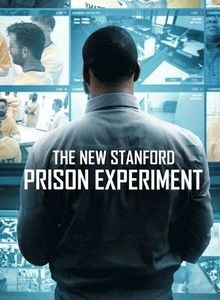
The New Stanford Prison Experiment Review





The New Stanford Prison Experiment arrives with the kind of premise that practically dares a reviewer to become smug about human nature. We already know the broad outline of the original study’s legacy: authority curdles, vulnerability gets exploited, and the supposed line between role-play and reality proves thinner than anyone would like. What this film does, though, is resist the comfort of being merely a retelling. It is less interested in re-staging a famous psychology experiment than in examining how its afterimage still haunts the way we talk about power, consent, complicity, and institutional performance. As an experienced film enthusiast, I found that ambition both the movie’s greatest strength and its most persistent challenge.
What immediately stands out is the film’s tonal discipline. Rather than dressing itself up as a sensational chamber piece, it approaches the material with a controlled, almost clinical unease. That choice pays off. The director seems determined to avoid easy melodrama, and the result is a movie that gets under the skin by refusing to shout. The most unnerving moments are not the loud conflicts but the pauses, the silences in which people realize they are either being watched or are actively participating in the watching. The camera lingers just long enough for discomfort to set in, then pulls back before the viewer can settle. It is a smart, often unsettling rhythm.
The performances are central to that effect. This is an ensemble film in the truest sense, and the cast understands that the story depends on gradations rather than grandstanding. The actors playing the students are especially effective because they do not reduce their characters to obvious types. Some are eager, some resentful, some passive, some eager to please in ways they do not fully understand. That ambiguity matters. The film’s most convincing idea is that abuse of power rarely begins with obvious villainy; more often, it begins with social friction, inertia, and the repeated decision to let something slide. The performers capture that slow moral erosion with impressive precision.
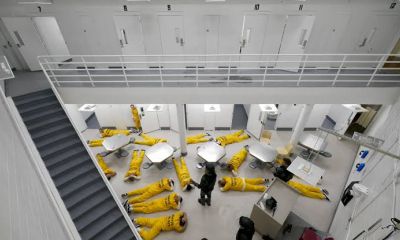
Visually, the film opts for a subdued palette that works in its favor. The spaces feel institutional without becoming generic, and the production design avoids the polished artificiality that can sink films of this type. There is enough texture in the rooms, corridors, and improvised setups to make the environment feel lived-in, but not so much that it distracts from the psychological stakes. The cinematography is restrained, sometimes almost austere, which suits a narrative about systems stripping people down to roles. Faces are frequently framed in ways that accentuate fatigue and uncertainty. Even simple compositions carry latent menace because they keep reminding us that everyone in the room is both observer and observed.
What I appreciated most, however, was the screenplay’s willingness to complicate blame without diffusing responsibility. The New Stanford Prison Experiment is not interested in letting anyone hide behind the excuse of academic curiosity, and it avoids the lazy trap of making all participants equally guilty in a vague, hand-waving sense. Instead, the film tracks how authority gets normalized through repetition. A rule is issued, then reinforced, then tacitly accepted, and finally absorbed into the atmosphere. By the time anybody is asking whether the line has been crossed, the line has already become infrastructure. This is where the movie feels most contemporary. It understands that harmful group behavior rarely arrives as a single catastrophe; it accumulates through procedure.
That said, the film is not entirely without strain. At times, its intellectual seriousness tips into a certain self-conscious heaviness. There are stretches where the dialogue seems less like natural speech and more like arguments being laid out for eventual discussion. I do not object to movies that want to think out loud, but here the writing occasionally over-explains what the images have already conveyed. The result is a slight tension between showing and declaring. Fortunately, the stronger scenes are confident enough to absorb that flaw.
There is also a noticeable editorial intelligence at work. The film avoids the temptation to race through the material in the name of momentum. Instead, it lets pressure build incrementally. The pacing may frustrate viewers expecting a more conventional thriller structure, but that resistance is part of the point. This is not a movie about twists; it is a movie about thresholds. Every minor escalation feels psychologically earned, and every attempt at order seems to produce a new disorder. The gradual decay of etiquette into coercion is rendered with enough patience that the film becomes almost procedural in its dread.
As a piece of social commentary, the film is strongest when it implicates the audience without turning preachy. Like any good work of cinema about institutional behavior, it asks an uncomfortable question: what does it mean to remain passive in the presence of obvious imbalance? The movie is not content to dramatize cruelty from a safe distance. It keeps returning to spectatorship itself, to the ways people justify observing harm because they are not the ones directly inflicting it. That thematic thread gives the film a resonance that extends beyond its classroom setting. It feels less like a historical reconstruction than like a pressure test for contemporary ethics.
Still, the movie is not a perfect fit for all viewers. Its discipline may read as emotional distance, and those looking for a more accessible dramatic arc may find the experience too studied. There are moments when the film seems almost afraid of becoming too entertaining, as if it worries that strong dramatic propulsion might compromise its seriousness. I think that caution is understandable, even admirable, but it does occasionally blunt the immediacy. A slightly freer hand with pacing or character intimacy might have made the final impact even sharper.
Then again, not every film about moral collapse should aim to be easy to enjoy. The New Stanford Prison Experiment is designed to leave a residue. It asks the viewer to sit with the discomfort of systems masquerading as experiments and experiments mutating into systems. That is a compelling terrain, and the film navigates it with enough intelligence to merit serious attention. I would not call it a crowd-pleaser, and I suspect it will divide viewers based on how much tolerance they have for slow-burn psychological stress. But for those who appreciate cinema that treats human behavior as a shifting, precarious negotiation rather than a tidy moral lesson, it offers real value.
In the end, what lingers is not a single shocking scene but the cumulative sense that everyone involved has been rehearsing a version of themselves they did not fully understand. That, to me, is the film’s sharpest insight. It recognizes that power rarely announces itself as power. It arrives as permission, as structure, as a game that has gone on so long nobody is sure who is still pretending. The New Stanford Prison Experiment may not be the most emotionally generous movie of the year, but it is one of the more thought-provoking. It watches people observe each other, and in doing so, it forces us to look at the machinery of obedience with renewed, uncomfortable clarity.
How to watch The New Stanford Prison Experiment online
Availability & Access: The New Stanford Prison Experiment may be available to watch, stream, or download depending on your region and current licensing deals. Some platforms may offer it free with ads, while others require a subscription or one-time rental. If you want to watch online, check major platforms first, since availability can change quickly and may vary by country. Unblocked access may also depend on your local network and service restrictions.
Age Rating (US-based): R. The film’s tense subject matter and psychological intensity make it best suited for mature audiences.
Netflix: Availability can vary by region. If it appears in your library, subscription access may include offline download on supported devices.
Amazon Prime Video: Often available to rent or purchase, with offline viewing possible through the app after purchase or rental, depending on device support.
Apple TV: Typically offers a rent or buy option in high quality, and downloads are usually available for offline viewing through the Apple TV app.
Peacock: Availability may be limited to premium tiers if included at all; download options are generally tied to paid plans and supported devices.
Hulu: If listed, it may require a subscription to stream, with download limitations depending on plan and device compatibility.
YouTube (Movies): Usually available as a rent or buy title, with downloads possible through the app for offline access on supported devices.
Pros
- Thoughtful exploration of power, authority, and institutional behavior.
- Strong ensemble performances with nuanced, believable character dynamics.
- Controlled, unsettling tone that builds discomfort effectively.
- Subdued cinematography and production design that support the психологical tension.
- Script avoids easy villainization and complicates blame in a smart way.
- Pacing allows pressure and moral decay to build gradually.
- Meaningful social commentary that feels relevant beyond the film’s setting.
Cons
- Occasionally over-explains ideas that the visuals already communicate.
- Pacing may feel too slow for viewers expecting a more conventional thriller.
- Its intellectual seriousness can create some emotional distance.
Screenshots