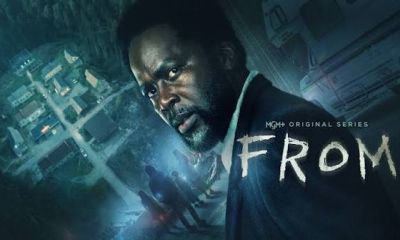
FROM - Season 1 Review




There are horror shows that announce themselves with a shriek, and then there is FROM, a series that prefers to let unease seep through the floorboards, the tree line, and the very idea of safety. Season 1 arrives like a town you were never meant to find on a map and, once found, cannot leave behind in your mind. It is rare to watch a show that understands atmosphere so completely. FROM does not merely build tension; it makes tension part of the air the characters breathe.
As a film enthusiast, I’m always alert to a series that knows how to use mystery without mistaking obscurity for depth. FROM mostly gets that balance right. Its first season is not a puzzle box designed to frustrate for sport. Instead, it creates a rule-bound nightmare where the rules are just clear enough to be terrifying and just murky enough to keep you leaning forward. That is a difficult trick to pull off. Many genre series confuse withholding information with suspense. FROM, at its best, understands that suspense comes from consequence. Every unanswered question feels dangerous because every answer seems likely to reveal a worse one.
The premise is strong in a deceptively simple way. Travelers become trapped in a strange town that appears ordinary until dusk, when the woods around it become profoundly hostile and the residents must follow strict routines to survive the night. The setup could have been handled as a one-note thriller, but the series smartly broadens its vision. It is not simply about staying alive until morning; it is about how people construct a society when the usual laws of the world no longer apply. That gives the show more dramatic weight than a basic survival story. In other words, FROM is not just about the monsters outside. It is about what happens to a community when certainty itself disappears.
What impressed me most across the season was the show’s control of pace. It resists the temptation to overexplain its central mysteries, but it also never feels inert. Each episode adds pressure from a new angle: a shifting emotional alliance, a fresh clue, an unsettling encounter, a private breakdown. That structure gives the season the feeling of a dark, tightening spiral. You may not get a flood of answers, but you do get forward motion, and in a mystery-driven horror series, that matters enormously. The writers know that viewers will tolerate ambiguity if the scenes are alive with purpose. Here, they usually are.
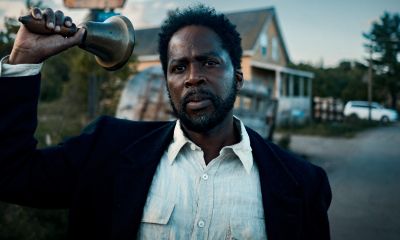
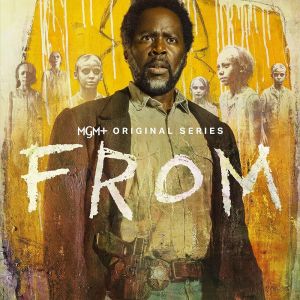
The cast helps tremendously. Harold Perrineau gives the material a grounded, mournful authority. He plays one of the town’s key figures with the weariness of a man who has had to become a leader not because he wanted the role, but because he understood the cost of not taking it. That kind of performance can easily slide into generic genre gravitas, but Perrineau avoids that trap. He lets the character’s fear show through the discipline. The result is a performance that feels lived-in rather than calibrated.
Elsewhere in the ensemble, the show benefits from actors who understand that small reactions matter as much as big speeches. FROM is at its best when it lets silence reveal the fault lines in a family, a friendship, or a town meeting. Some characters arrive with immediate emotional clarity, while others are intentionally more opaque. That unevenness is generally a strength. A pressure-cooker story should not make everyone equally legible. People under strain become harder to read, not easier. The series captures that well, even if a few supporting arcs occasionally feel thinner than they should.
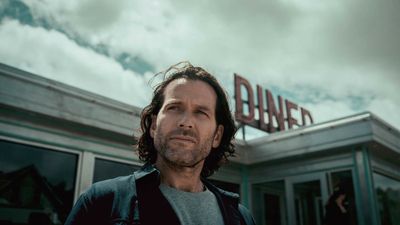
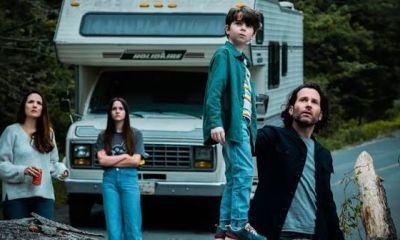
Visually, the season has a sturdy, almost old-fashioned dread. The town’s daytime normalcy is never truly reassuring, because the camera keeps reminding you that the same streets, houses, and wooded edges will become a trap after dark. I appreciated how often the series uses space as a form of threat. Long roads, empty yards, windows, and doors all become loaded images. The woods are shot not as lush romantic wilderness but as a boundary that seems to think. That may sound exaggerated, but it is precisely the right mood for this kind of story. The landscape feels alive in a deeply unhelpful way.
The sound design deserves special mention. Horror is often made stronger by what it refuses to show, but FROM also knows the value of what it refuses to let you hear clearly. The hush before nightfall, the distant noises in the dark, the abrupt punctures of violence or panic—all of it works together to create an environment of constant vigilance. Even ordinary conversations can feel like they are happening under threat. That sensory pressure is one of the reasons the season is so watchable, even when the narrative is taking its time. You don’t merely follow the story; you inhabit its anxiety.
Still, the season is not without frustrations. Some of the mystery-box architecture can feel a little too familiar if you have spent years watching prestige-adjacent genre television. Questions multiply quickly, explanations arrive slowly, and the show occasionally leans on cryptic behavior to stretch scenes that could have been sharper. There are also moments when character decisions exist more for plot propulsion than emotional realism. I don’t think these flaws sink the season, but they do keep it from becoming truly exceptional. It is a very good engine with an uneven chassis.
Even so, the emotional undertow is strong enough to keep the whole thing moving. The show understands the loneliness of being trapped somewhere with strangers, especially when those strangers become your only hope. That is one of the most effective aspects of Season 1: it treats communal life as both a defense mechanism and a source of conflict. Everyone in the town is carrying grief, suspicion, or denial, often all at once. The horror is external, but the drama is interpersonal. That combination gives FROM a sturdy identity. It is eerie, yes, but it is also human.
What I found most admirable was the series’ confidence in repetition as ritual. The nightly routines, the warnings, the enforced habits of survival—these details create a grim stability. In many shows, repetition signals stagnation. Here it signals the effort to preserve civilization at the edge of collapse. That is a smart thematic layer. The town survives not because it is safe, but because people keep doing the same necessary things in a place where novelty can be fatal. FROM turns routine into a form of dread, and that is a sophisticated tonal choice.
As a season, this is one of those rare horror dramas that can be recommended to viewers who like their fear interwoven with social dynamics, mystery, and slow-burn revelation. It won’t satisfy anyone looking for tidy exposition or constant payoff. But for viewers willing to sit inside uncertainty, it offers enough texture to reward patience. The show’s biggest strength is not that it answers everything, but that it makes the absence of answers feel dramatically meaningful. That is a harder achievement than it first appears.
In the end, FROM Season 1 succeeds because it respects the audience’s intelligence while still committing to genre pleasure. It creates a world that feels both invented and unnervingly plausible, then populates it with people who seem one bad night away from breaking apart. The result is a series that is more than a gimmick and more than a collection of shocks. It is a mood, a system, and a sustained invitation to worry. For a horror fan, that is a compelling place to spend ten episodes.
How to watch FROM Season 1 online
Availability & Access: FROM Season 1 is typically available to stream on MGM+ in the United States, with access through the service’s subscription model rather than a free offering. Depending on your region, it may also be available on select platforms for rent or purchase. If you want to watch online, check current listings on major streaming platforms, since availability can change by country and over time. Download options are usually tied to the app and an active subscription.
Age Rating (US-based): TV-MA. The series contains intense horror content, strong language, and adult material, so it is intended for mature viewers only and is not suitable for younger audiences.
Streaming Platforms: Netflix does not currently carry FROM Season 1 in the US, though library status can shift by region. Amazon Prime Video may offer rent or purchase access in some markets, with offline downloads available through the app for eligible titles. Apple TV commonly provides purchase or rent options in high quality, with download availability for offline viewing. Peacock availability varies; some titles are free with ads at times, but FROM is generally more likely to require a subscription or may not be listed there. Hulu usually does not include the series as part of the standard library, and trial access depends on current promotions. YouTube (Movies) may offer rent or buy options, with downloads supported through the YouTube app for eligible purchases.
Pros
- Strong atmospheric horror that sustains unease throughout the season
- A compelling mystery premise that keeps viewers curious without losing momentum
- Harold Perrineau gives a grounded and layered lead performance
- The ensemble effectively sells the tension and emotional strain of the town
- Excellent use of sound design, silence, and nighttime dread to build suspense
- The setting feels distinctive and memorable, with the town itself becoming a character
- The season balances supernatural horror with interpersonal drama in a satisfying way
Cons
- Some mystery elements feel familiar to fans of prestige genre television
- A few scenes stretch out cryptic dialogue or behavior more than necessary
- Certain supporting characters and subplots feel underdeveloped
- Some plot decisions seem driven more by tension than by believable character logic
Screenshots