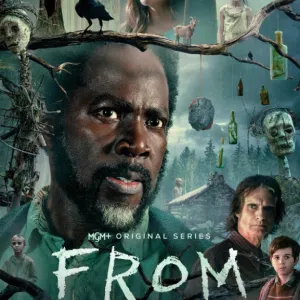
FROM: Season 3 Review


There are television sensations that arrive with the tidy confidence of a well-oiled brand, and then there are the shows that seem to have been dragged out of a much darker, stranger place and handed to the audience with a warning label that only heightens the temptation. FROM: Season 3 belongs firmly to the second category. It does not merely continue a mystery; it deepens a pressure chamber. It takes the eerie social ecosystem of the town, the ever-present threat of the forest, and the unresolved emotional wounds of its residents, and then compresses them until nearly every scene feels like it might fracture under the strain.
As someone who has followed genre television for years, I admire a series that knows the value of withholding, but I admire even more one that understands how to make impatience productive. Season 3 does exactly that. It does not flood the canvas with answers just to gratify the audience. Instead, it uses its secrets as architecture. Every corridor, every argument, every tentative alliance, every sleepless stare toward the tree line feels like part of a design whose final shape remains only partially visible. The result is not merely suspenseful; it is communal anxiety. You do not simply watch this season. You inhabit its nerves.
A town that keeps changing shape
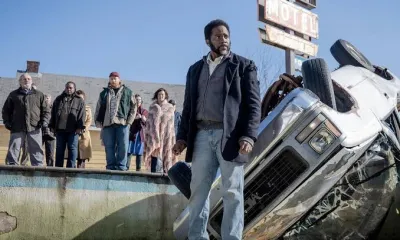
The strongest ongoing achievement of FROM has always been the way its setting behaves like a living adversary. This is not a static monster-of-the-week premise. The town is an organism of rules, omissions, and cruel adjustments. In Season 3, that idea grows more unnerving because the residents’ understanding of their prison is no longer enough to protect them from what the prison may be becoming. The geography remains recognizable, but emotionally it feels less stable than ever. Paths no longer imply safety. Familiar places acquire the taint of unreliability. Even moments of relative calm can feel like traps waiting for the right sound cue to snap shut.
What this season does especially well is expand the mythology without flattening mystery into exposition. That is a delicate balance, and one many genre series fail to maintain once their world-building thickens. Here, the revelations arrive in fragments, often through conflict rather than explanation. Information is resisted, argued over, distrusted, and frequently weaponized. That makes the storytelling feel human rather than schematic. People in crisis do not deliver elegant lore summaries; they lash out, speculate, deny, and cling to whatever theory helps them sleep. Season 3 respects that psychological truth.
Character pressure, not just plot pressure
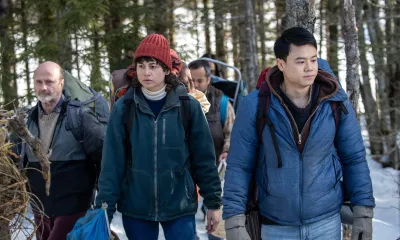
What keeps FROM from becoming a purely conceptual exercise is its attention to the emotional aftershocks of being trapped. Season 3 sharpens that focus. These characters have already endured enough to make another season of survival feel almost cruel, but cruelty is the point of the premise. The show is at its best when it treats psychic erosion as seriously as external danger. Relationships become brittle under uncertainty. Leadership turns into a burden nobody truly wants. Loyalty is tested not through grand speeches but through choices made when no one is looking.
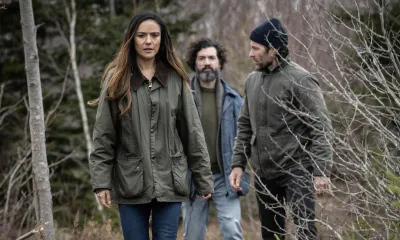
From a reviewer’s standpoint, the ensemble remains one of the series’ best assets. The performances do important work because the material requires actors who can carry dread without overplaying it. There is a careful roughness to the way people speak to each other here, as if every conversation is happening just below the surface of panic. That tonal discipline prevents the show from sliding into melodrama, even when the stakes are extreme. Instead, emotional rupture feels earned, and when people finally crack, the cracks feel frighteningly plausible.
Season 3 also understands that a good mystery depends on contrasting kinds of faith. Some characters trust systems, some trust intuition, and some trust nothing at all. Watching those worldviews collide is part of the series’ pleasure. The season’s best dramatic moments often come not from the threat itself, but from the obligation to decide what kind of person you become when threatened long enough.
The horror is patient, and that makes it stronger
This is not a season built on cheap jolts, and that restraint gives it greater staying power. Yes, there are startling moments, but the true horror of FROM: Season 3 lies in anticipation. The show has learned how to stretch unease across scenes, making silence feel crowded. Doors linger closed a beat too long. Background movement matters. The camera often seems aware of things the characters do not want to acknowledge. Even the daylight bears a compromised quality, as if the world itself has simply learned to imitate normality rather than embody it.
That atmosphere is supported by a production design language that continues to be one of the series’ quiet triumphs. The town is not especially ornate, but it is deeply expressive. Its plainness becomes a source of menace because it denies the viewer the visual relief that more stylized horror might provide. This is a place where the ordinary and the impossible coexist too comfortably, and that friction is precisely what makes the series linger in the mind. The design team deserves credit for understanding that unease is often more effective when dressed in familiar clothes.
The soundscape remains equally important. The show often uses audio not as ornament but as psychic pressure. Distances feel distorted. Sudden noises intrude like accusations. Silence, paradoxically, becomes one of the most aggressive tools. For viewers who care about craft, this is the sort of series that rewards close attention to detail; for viewers who want to simply stream something intense and stay absorbed, the technical control is just as persuasive.
Where the season stumbles
No honest review should pretend that a series this ambitious is flawless. The biggest challenge for FROM has always been pacing, and Season 3 occasionally shows the strain of balancing expanding mythology with episode-to-episode urgency. Some character arcs hold more immediate dramatic charge than others, and at times the season may feel as though it is distributing revelations with one eye on the long game rather than the present episode. That can frustrate audiences who want a firmer sense of directional momentum.
Even so, I would argue that the show’s hesitation is more virtue than defect. It is riskier to preserve ambiguity than to over-explain, especially in a streaming era that often rewards speed over atmosphere. Season 3 trusts its audience to tolerate uncertainty, and that trust is part of what makes it compelling. It refuses to become a checklist of answers. It remains, instead, a drama of pressure, suspicion, and imperfect adaptation.
Why it still commands attention
FROM: Season 3 is not light entertainment, nor does it aim to be. It is the sort of series that asks your attention and expects your nerves in return. If that sounds exhausting, it is, and that is part of the appeal. The show understands that true horror is frequently social as much as supernatural: the terror of not knowing whom to trust, what rules still apply, or whether the world you knew has been replaced by something only pretending to be the same.
For viewers who enjoy layered genre storytelling, this season should be a strong reason to watch, especially if you appreciate a series that values tone, enigma, and escalating dread over simple closure. It is not designed for casual glance-and-scroll viewing. It rewards immersion. If you prefer your horror with a slow-burn pulse and your drama with existential stakes, this is one of the more distinctive options available on current platforms.
In the end, Season 3 strengthens what the series does best: transforming uncertainty into an engine of emotional and narrative momentum. It remains cagey, unsettling, and occasionally exasperating, but those qualities are not incidental. They are the point. The town is still there, still watching, still changing the terms. And the season’s most effective achievement is reminding us that survival is not the same thing as safety, especially when the rules were never ours to begin with.
How to watch FROM: Season 3 online
FROM: Season 3 is typically available to stream through major subscription platforms depending on your region, and availability may change by territory. It is not usually offered for free on mainstream services, though some platforms may include a trial period for new users. For the most reliable access, check whether the season is included in your current subscription or available to rent or purchase online.
Age rating: TV-MA in the United States, which is the closest US-based age classification to note for adult-oriented content; this makes it unsuitable for younger viewers.
Netflix: Availability varies by country, and it may not be included in all libraries. If listed, offline download is usually available through the app for subscribers on supported plans.
Amazon Prime Video: Often offers the season to rent or purchase if it is not included with Prime. Downloads are available in the app for purchased titles and select subscriptions.
Apple TV: Commonly provides purchase or rent options in high quality, with download availability through the Apple TV app for offline viewing.
Peacock: Availability depends on licensing and region. Some titles require a premium subscription, and download access is limited to eligible plans and devices.
Hulu: May carry the series depending on current rights. Streaming requires a subscription, and offline download is limited to supported plan tiers and devices.
YouTube (Movies): Usually offers rent or buy access rather than subscription streaming. Downloads are available through the YouTube app for titles you have purchased, subject to app and device rules.
Pros
- The season deepens the show’s mythology without rushing into easy explanations.
- Atmosphere and dread are consistently strong, making each episode feel tense and immersive.
- The ensemble cast delivers believable, emotionally grounded performances.
- Production design effectively turns an ordinary town into a disturbing, unstable setting.
- The series balances supernatural horror with human conflict and social paranoia.
- Sound design and visual tension are used well to build anticipation before scares arrive.
- The season maintains a strong sense of mystery that keeps viewers engaged.
Cons
- Pacing can feel uneven, especially when the story prioritizes suspense over immediate payoff.
- Some character arcs feel less developed or less urgent than others.
- The season may frustrate viewers who want clearer answers instead of prolonged ambiguity.
Screenshots