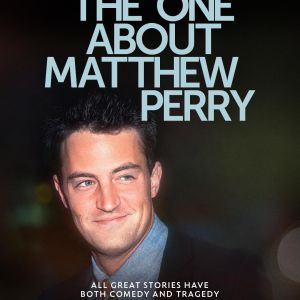
The One About Matthew Perry Review





Matthew Perry told much of his own story before he died. His 2022 memoir, Friends, Lovers, and the Big Terrible Thing, laid out decades of addiction and repeated attempts at recovery in plain, often funny language. So when Netflix announced a documentary about him, a fair question followed: what's left to say?
The One About Matthew Perry premiered on October 27, 2026, the day before the third anniversary of his death on October 28, 2023. Critics have been largely kind to it, though not everyone thinks it needed to exist. Here's how the series answers that question, and where it falls short.
The case for a new look
The strongest argument for the series is the people in it. Carol Midgley at The Times wrote that what sets it apart is "the quality of interviewee, the people who really knew him, long before he was famous." She added, "It feels as if we are getting the full, complete picture."
The central voice belongs to Mia Perry Bowick, his younger half-sister, who works as a psychotherapist. Her goal, as Wikipedia summarizes the announcement, was to present her brother "as a whole person, not just as Chandler, and not just as someone who struggled with addiction." Her perspective is something the memoir, written from inside his own head, couldn't offer.
Zaki Hasan at TheWrap made a similar point. The series, he wrote, "allows his friends, family and admirers to remember the whole, complicated person."
The case against
Benji Wilson at The Telegraph was less convinced. "The problem with The One About Matthew Perry is that it is not the only one about Matthew Perry," he wrote, calling it "a tragic tale but a familiar one."
Dominic Patten at Deadline was the sharpest critic. According to Wikipedia's summary, he felt viewers would find little they hadn't heard before. He also suggested the series exists partly to keep people scrolling through Netflix.
That debate is worth knowing about before you press play. If you've read the memoir closely, some chapters will feel like a recap.
How the story is told
The series is split into three parts of roughly an hour each, rated TV-MA. Rotten Tomatoes' episode summaries give a clear outline.
Part one follows Perry from "class clown to aspiring actor hoping to make it big" until his casting on Friends changes everything. Part two tracks the years when "his battle with addiction becomes more public" and he struggles to keep working through "a worsening cycle of rehab and relapse." Part three covers his last years, beginning with a serious medical emergency and ending with his death.
The final hour also follows the legal fallout. People who illegally provided the ketamine linked to his death were later prosecuted, and E. Martin Estrada, the former U.S. attorney who oversaw those cases, speaks on camera.
Voices from every chapter of his life
Beyond his sister, the interview list reads like a map of Perry's life. Roger Castillo and David Pressman knew him as a kid. Tim Harrington met him at AA in 2001. René Ashton dated him. Former NBC executive Warren Littlefield and early Friends writer Jeff Strauss explain how the show came together, and Jonathan Lynn recalls directing him in The Whole Nine Yards. Kevin Pollak and Los Angeles Times columnist Mary McNamara also appear.
His famous castmates do not. None of the Friends stars agreed to new interviews, so they're seen only in old footage. That might disappoint some fans. It also keeps the focus on people who knew Perry the person rather than Perry the sitcom star.
Home videos and photos from the family's own collection add warmth. Seeing Perry as a child, or relaxed among friends, makes the later episodes hit harder.
The filmmaker
Mary Robertson directed the series for Maxine Productions, which is part of Sony Pictures Television. Her earlier work includes Quiet on Set: The Dark Side of Kids TV, another series about the hidden costs of fame. She shares executive producer credit with a team that includes Eli Holzman and Aaron Saidman.
Several critics noted her restraint. Richard Roeper said the result "isn't some lurid, tabloid exploitation of Perry's life and times." Daniel Fienberg at The Hollywood Reporter, according to Wikipedia, described it as "a sincere, generally non-exploitative examination of addiction and celebrity."
Addiction at the center
Chris Vognar at the Boston Globe argued that the series is really about addiction itself, which he described as a "rapacious, ever-vigilant monster." That framing gives the documentary weight beyond celebrity biography.
The series also spends time on Perry's work helping others get sober. Roger Moore at Movie Nation found that thread especially affecting, saying it "points to a path his life might have taken."
Viewers who have struggled with substance use, or lost someone to it, should know the series is frank and at times painful. It handles the subject seriously, but it doesn't soften it.
Too long, or not long enough?
Oddly, critics disagreed on length in both directions. Fienberg felt the good material gets buried, writing, "There's so much good stuff in The One About Matthew Perry that it's unfortunate how often it's lost underneath so much less interesting stuff." Wikipedia reports he thought a 100-minute film would have worked better.
Moore felt the opposite problem, that three hours still left gaps. Both views point to the same issue: the series isn't always sure what to prioritize.
The scorecard
Most of the reception is warm. Rotten Tomatoes shows 95% from 22 critics, and Metacritic lists it at 71 from 10 reviews. Jonathon Wilson at Ready Steady Cut called it "Honest, exhaustive, and genuinely moving." Belen Prieto at Espinof gave it 4 out of 5, and Sreeparna Sengupta at The Times of India did the same.
So, is it worth your time?
For longtime Friends fans, probably yes. Sengupta warned them to "Be prepared to have your heart broken," and that seems accurate.
For readers of the memoir, it's a closer call. You'll recognize much of the story, but his sister's voice and the family footage give it a different shape.
I think the series works best as a companion to Perry's own words rather than a replacement. Read together, they show both how he saw himself and how others saw him.
I would recommend spacing the episodes out. The last one is heavy, and it deserves your full attention.
Pros
- Thoughtful and respectful treatment of Matthew Perry’s life and legacy.
- Balances fame, vulnerability, and addiction without reducing him to a single narrative.
- Uses archival footage effectively to create emotional contrast and depth.
- Avoids both excessive sentimentality and sensationalism.
- Strong pacing and editing give the documentary a polished, reflective feel.
- Offers a meaningful cultural critique of celebrity and public perception.
- Emotionally resonant for both longtime fans and general viewers.
Cons
- Some viewers may want a deeper critique of the systems around fame and recovery.
- The documentary can feel somewhat restrained when exploring the most difficult topics.
- It may cover familiar ground for audiences already well acquainted with Perry’s story.
Screenshots