Unabomber Review

In 1995, a man named David Kaczynski read a manifesto in the newspaper and heard his older brother's voice in it. He and his wife, Linda, had seen the same turns of phrase in Ted's old letters. That moment ended one of the longest manhunts in FBI history. Agents arrested Ted Kaczynski at his cabin in Montana in April 1996, after a bombing campaign that ran from 1978 to 1995, took three lives and left 23 people injured.
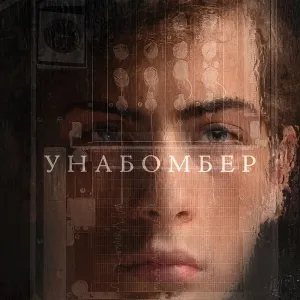
Netflix's new drama, simply called Unabomber, wants to tell you how the young man in those letters got there. It went up on the service on September 25, 2026, and it climbed the U.S. viewing charts fast. Reviewers were much cooler on it. The gap between those two reactions is worth a closer look.
A film built on two clocks
The script cuts between two eras. One is 1958. Kaczynski is a teenage math prodigy who arrived at Harvard at 16, and he volunteers for a set of psychology experiments led by Henry Murray and Christiana Morgan. These sessions really happened. Students sat through harsh questioning that was meant to break down what they believed. The film treats this as the place where Ted starts to close himself off and sour on the modern world.
The other era is the 1990s. Shailene Woodley plays Joanne Miller, an FBI agent whose team pores over the manifesto looking for anything that could point to its author. Her thread runs up to the point where David and Linda make the connection that cracks the case.
So the movie keeps jumping between a lab room in Cambridge and an FBI office decades later. The idea is that each era sheds light on the other. Whether that works is the main question hanging over the whole thing.
Who is on screen
Jacob Tremblay takes on the role of the young Kaczynski. Many people still picture him as the child actor from Room and Wonder, so seeing him as a gifted, prickly and slowly hardening student is a real shift. Russell Crowe plays Murray, the professor running the study. Annabelle Wallis plays Morgan, his research partner.
The wider cast includes Alexander Ludwig and Steven Ogg, plus Marc Menchaca and Gus Halper. Janus Metz Pedersen directed. His earlier film was the tennis drama Borg vs McEnroe. Sam Chalsen and Nelson Greaves wrote the screenplay. The shoot took place in Montreal in June 2025, and the finished cut lasts roughly 100 minutes.
Is the acting the reason to watch?
For most reviewers, yes. The headline on IndieWire's review said Tremblay "stuns" in the part. Robert Daniels at RogerEbert.com was rough on nearly everything else, yet he still singled out "a temperamental Tremblay" and "a sly Crowe," and he felt the two leads lift themselves above the material around them.
The Harvard thread lives or dies on those two men facing each other. Crowe's professor holds all the power in the room. Tremblay's student is sharp but exposed. RogerEbert.com noted that their last big argument plays out the way you'd guess, but that both actors handle it well.
Woodley did not get the same treatment. Daniels wrote that "the less said about the wooden Woodley, the better." That's a hard line to read if you came for her, and it hints that the FBI half of the film may feel thinner.
The verdict from reviewers
The numbers are not kind. Rotten Tomatoes lists a 23% score based on 26 reviews. Metacritic puts it at 46 out of 100, a grade the site labels "mixed or average."
Daniels went furthest, calling the movie "a shallow made-for-TV movie." His bigger complaint was about structure. In his view the 1958 scenes don't really feed into the 1990s scenes, and the adult Kaczynski is barely in the picture. That leaves a hole right where the film's main link should be. He was also unhappy with how the movie opens, on a mail bomb scene, because it turns a victim's pain into a source of tension.
Variety's headline didn't hold back either, describing the film as "a hokey Netflix retread of the Ted Kaczynski case." IndieWire, though warm toward Tremblay, said in its own headline that the film "still can't decide if Kaczynski was crazy." That line sums up the core issue. The movie raises the question of why he turned to violence and then never settles on an answer.
Why Harvard, and why it's tricky
This is the part that sets the film apart. Most retellings of the case are chase stories built around the investigators. This one spends a lot of its time on a study Kaczynski joined as a teenager.
People have argued about that study for years. Some writers think it may have fed the rage that came later. Others say it's a mistake to lean on it as the reason for what he did. The movie clearly likes the theory, but reviewers felt it stops short of digging in.
That hesitation may come from a real problem. A film about a real killer can easily drift into asking us to feel for him more than we should. It can also shrink a messy life into one neat cause. Unabomber seems stuck between those two risks, and it doesn't fully escape either one.
I would argue the hesitation is partly to the film's credit. Blaming a set of lab sessions for murder would be too easy. But a movie that won't pick a side still needs to give the audience something solid to hold on to, and critics felt this one doesn't.
Other ways into the story
You have options if the case itself is what draws you. Netflix also carries Unabomber: In His Own Words, a documentary series built around tapes of Kaczynski speaking. Then there's the 2017 series Manhunt: Unabomber, with Paul Bettany as Kaczynski and Sam Worthington as an FBI profiler. That show often comes up as one of the better dramas made about the case.
Next to those, this one runs shorter and looks at a smaller slice. It cares more about the teenager than about the hunt. That gives it its own lane, even if the reviews suggest it doesn't drive it very well.
Why so many people pressed play
Bad reviews haven't kept viewers away. TheWrap reported Samba TV figures showing Unabomber as the top streaming title across its panel of U.S. homes for the week ending in early October. It finished ahead of Monster: The Lizzie Borden Story and Ted Lasso.
That makes sense. True crime pulls huge numbers on Netflix, and a famous case paired with known actors is hard to scroll past. Critics rarely change that math.
Remembering who was hurt
Before getting caught up in a debate about a killer's college years, it helps to keep the real cost in view. Three people died in these attacks. Many others were left with serious injuries. Their lives matter more than any theory about what made Kaczynski who he was, and they deserve a place in your thoughts whenever his name is on screen.
So, is it worth your evening?
It depends on what you want. If the Harvard chapter is new to you, or you're curious to see Tremblay in a grown-up role, the film offers something. The two lead performances are the strongest selling point by a wide margin.
If you want the fullest and most trusted version of events, look elsewhere first. The documentary series and the 2017 drama both cover more ground, and reviewers broadly found this one uneven.
I'll admit the question at the center of the film is a good one, even if the answer never arrives. If you watch it, think of it as one take on a hard story. Then let the documentaries and books fill in the rest.
Pros
- Rich and complex narrative that invites deeper reflection
- Multi-layered character development offers a nuanced perspective
- Innovative cinematography that enhances atmospheric storytelling
- Evocative score and sound design that heightens emotional impact
- Balanced approach to controversial themes without sensationalism
- Encourages intellectual dialogue and thoughtful analysis
Cons
- The slow pacing may not engage viewers seeking fast-paced action
- Complex narrative structure can be confusing for some audiences
- The intense subject matter may be too polarizing for sensitive viewers