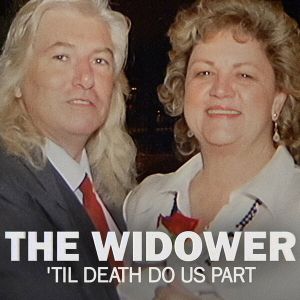
The Widower Review





A neighbor heard gunshots. Twelve minutes passed before Thomas Randolph dialed 911. That gap, along with a ski mask that had no blood on it, is what first bothered Detective Dean O'Kelley about the story Randolph told on May 8, 2008, in Las Vegas.
Randolph said an intruder had shot his wife, Sharon Causse, after the family's Mother's Day dinner, and that he had then shot the intruder. It looked, at first, like a break-in that went badly. The new Netflix documentary The Widower: 'Til Death Do Us Part, released on September 30, 2026, follows what happened once people started asking questions. PureWow reported that it reached No. 2 on Netflix's movie chart soon after release.
A camera that was already in the room
Most true-crime films are built after the fact. Somebody gathers old news clips and sits witnesses down years later. This one had a different starting point.
Dan Slepian, a producer who spent years at NBC's Dateline, was already embedded with the homicide unit of the Las Vegas police, filming cases as they moved along. He learned about the Causse shooting the following day. From there, he stuck with the case alongside O'Kelley.
He kept filming for roughly 15 years. A large share of the documentary comes from that footage, so you watch the investigation take shape as it happened instead of hearing people recall it. Slepian put it in five words: "Every answer widened the frame."
What did investigators find?
The man Randolph shot was not a stranger. He was Mike Miller, who did handyman work for Randolph. Detectives came to believe Randolph had set Miller up to murder Sharon and then shot Miller to hide his own role.
The film then widens out to Randolph's earlier life. He married six times, and four of those wives died. Time's reporting on the documentary describes a troubling pattern in which life insurance policies were taken out on several of them.
Becky Gault was one. She died from a gunshot wound in the couple's Utah home in the 1980s. Officials first called it a suicide. That ruling was changed after Randolph received a $500,000 life insurance payout. He stood trial for her murder and was found not guilty.
Another of his wives died after surgery. Another died of cancer not long after their wedding. A couple of the marriages ended in divorce. The later husband of one of his ex-wives has said Randolph once tried to recruit him to terminate her.
The long road through the courts
The legal side of this case could be its own film. Here is how it played out, step by step.
Police arrested Randolph in January 2009. In 2017, a jury convicted him of murder, and he received a death sentence. Some years after that, the Nevada Supreme Court threw out the conviction, ruling that evidence from the Gault case should not have been used at trial.
He faced a second trial in 2023 and was convicted again. In 2024 the court sentenced him to 60 years to life in prison. Randolph is 71 now. He still says he is innocent, and in September 2026 his most recent challenge to the conviction failed.
The voices in the film
Beyond Slepian and O'Kelley, the documentary hears from Sharon's daughter, Colleen Causse. Two of Randolph's former wives, Kathy Thomas and Gaynal Allmon, also speak. So do Mike Miller's brothers, along with witnesses from several different states.
Randolph is in it too. He has kept up his conversations with Slepian from behind bars. Coverage of the film describes him as charming and charismatic, and that is exactly what makes him hard to watch.
Chris Smith directed. He has a long record in nonfiction, with American Movie and Fyre to his name, and he was an executive producer on Tiger King. You can feel that history here. Smith knows how to build a film around one magnetic person at its center.
A split among reviewers
This release hasn't drawn the wave of reviews that Netflix's bigger titles get, and the notices so far point in different directions.
PureWow was enthusiastic, saying it's a thrilling watch that will probably keep people awake at night. Most of the praise lands on the case itself. With this many twists, suspects and reversals in court, it could easily have filled a limited series.
Moviesr was far less taken with the craft. It scored the film 3.5 out of 10, objecting to a "Wikipedia-like style" and saying the story pushes ahead on "mechanical momentum" instead of building tension. Even so, that same review called the story compelling, and it gave credit to the way the film shows O'Kelley's early hunches turning out to be right.
That kind of split shows up often with true-crime documentaries. Nobody doubts the material is gripping. The real question is whether the filmmakers bring anything to it beyond laying out the facts in order.
Keeping the focus where it belongs
A film like this can slide into treating the accused as its star. The Widower does give Randolph plenty of screen time. Still, the people who matter most here are the ones who died, and the families who have waited years for answers.
Colleen Causse lost her mother. Mike Miller's brothers lost him. The women who married Randolph, those who did not survive and those who left, belong at the heart of this story at least as much as he does. I would hope viewers come away remembering their names as clearly as his.
One film, not a series
Fans of The Staircase or Making a Murderer will know the basic approach here: a case tracked across many years by people who were present near the start. The big difference is the format. This is a single feature that runs 91 minutes, not a multi-episode season, so it moves quicker and spends less time on each chapter.
Some viewers will like that. You can get the whole story in one night. Others, the kind who enjoy getting lost in every small detail, may feel it rushes through a case that had room for several episodes.
Should it be next on your list?
True-crime fans should give it a go. The case is truly odd. Footage shot during a live investigation is hard to come by. And following it across 15 years brings a real sense of an ending. At 91 minutes, it fits easily into one evening.
If you look for documentaries with a bold visual style or a deep emotional core, it may come across as plain. Think of it as a carefully sorted case file more than a piece of art.
I'll admit what stays with me is how much came down to chance. A producer happened to be working alongside the homicide unit. A detective happened to question a mask and a gap in time. Take either one away, and this could have been closed as a home invasion. If you do watch, keep Sharon, Mike and the others in mind. Their deaths are why any of this was worth filming.