Mayor of Kingstown Review






A 33% score on Rotten Tomatoes usually ends the conversation. Plenty of shows open that badly and quietly vanish. Mayor of Kingstown took the opposite route. Its first season earned that 33% from 27 reviews, along with a 54 on Metacritic, and then the numbers started to rise. By Season 4, the Rotten Tomatoes score had reached 100%, although only five critics had filed reviews. That slow climb is the most interesting thing about the show.
It also matters right now. On October 5, 2026, Netflix added all four seasons in the U.S. and most other regions. That's 40 episodes of a Taylor Sheridan crime drama, created with Hugh Dillon back in 2021, that used to live only on Paramount+, which is why so many people have only ever known it by name. The real question is simple. Is it worth sitting through a rough start to reach the good part?
A town that runs on prisons
Kingstown, Michigan, is a made-up place, but the idea behind it feels real. The town has seven prisons packed within a few miles. They are the local industry. If you grow up there, the walls shape your life one way or another, whether you wear a guard's uniform, visit a relative on weekends or make a living from the people moving through.
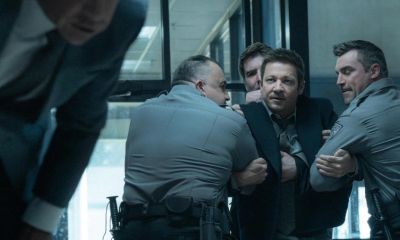
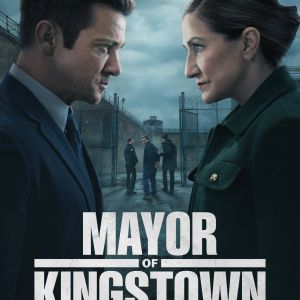
Mike McLusky, played by Jeremy Renner, sits in the middle of all this, and although folks around town call him the "mayor," nobody ever cast a single vote to put him there. The nickname comes from his role as the go-between. When a problem needs fixing between the inside and the outside, Mike is the one who gets the call. He has contacts among the gangs and the guards, and he is on first-name terms with the cops, the warden and the district attorney, so very few doors in Kingstown stay closed to him for long. His methods are blunt. He swaps favors, he leans on people, and now and then somebody ends up with broken bones.
Who else is in the McLusky orbit?
Mike never wanted the job. For years he tried to stay clear of the family trade. In Season 1, the fixer is actually his older brother Mitch, played by Kyle Chandler. Mitch's time in the role turns out to be short, and Mike is pulled in to replace him. It's a classic setup for a reluctant lead, and the show uses it well.
The youngest brother, Kyle, played by Taylor Handley, is a police detective, so the family has one son working the law and another working around it, and somehow they still sit down to eat together. Their mother, Mariam, teaches history at a college. Dianne Wiest plays her, and Mariam openly despises what her boys have become. Wiest was in the main cast for the first two seasons.
Co-creator Hugh Dillon also appears on screen as Ian Ferguson, a detective who partners with Kyle. Tobi Bamtefa plays Bunny Washington, a gang boss Mike relies on even though he can never quite predict him. Emma Laird plays Iris, a young woman tangled up with the Russian mob. Her storyline stretches across the first three seasons.
Why did critics change their minds?
The scores tell a story of their own, and they line up with how the plot grows. Season 1 ran from November 2021 to January 2022. It's about Mike discovering how much it really costs to keep the peace. It ends with a long and savage prison riot, and that event shapes the rest of the series. A lot of critics found this first run heavy-handed and too bleak, which explains the low numbers.
Season 2 aired from January to March 2023 and picks up the pieces. The balance Mike worked so hard to keep is gone, and rival groups move in to grab what they can. Critics warmed a little. It holds 50% on Rotten Tomatoes and a 60 on Metacritic.
Season 3 ran from June to August 2024 and goes further into the town's ties with organized crime. Here the score jumped to 78%. That's usually a sign a show has figured out what it wants to be.
Season 4 aired from October to December 2025 and added three notable newcomers. Edie Falco plays Nina Hobbs, the new warden, and she finally gives Mike a rival who works inside the system. Lennie James plays Frank Moses, a gangster out of Detroit. Laura Benanti plays Cindy Stephens, a new corrections officer who is out of her depth from the start. Five reviews is a tiny sample, so I wouldn't treat that 100% as gospel. Still, the trend points one way.
Renner as the tired center
Much of the show rests on Renner's shoulders. His Mike is worn out in body and in conscience. He keeps moving because the alternative looks even worse. You won't get grand monologues from him. He tends to listen first, answer in a few words and then act.
Off screen, Renner went through something serious. On New Year's Day 2023, roughly two weeks before Season 2 premiered, he was badly hurt in a snowplow accident at his home. He returned for Season 3. Knowing that, it's hard not to see some extra meaning in a character who keeps taking hits and standing up again.
Wiest gives the early seasons their best scenes. Mariam loves her son and can barely look at him, and her moments with Renner carry real weight. Falco, meanwhile, brings exactly the toughness you'd expect from her. She has built a career on women who are harder than they first appear, and Nina Hobbs suits her.
Is this just Yellowstone behind bars?
Not really. Fans of Yellowstone, Landman or Tulsa King will spot the Sheridan formula. A strong man stands at the center of a broken system, surrounded by people who make poor choices for half-decent reasons. The talk is tough and the stakes are personal.
The mood is different, though. Yellowstone gets wide open country and horses. Tulsa King gets laughs. Kingstown gets concrete and cold gray winters with almost no sun. Humor is rare, and when it shows up, it's bitter.
A better match might be The Wire. Both shows care about how institutions trap the people inside them, and that includes the guards as much as the prisoners. Mayor of Kingstown is less patient and less layered than that classic. It does, however, chase some of the same ideas.
A word about the violence
This part deserves a clear warning. The show does not cut away from what happens inside prison walls. Some scenes are very hard to sit through, because the series shows sexual violence along with brutal violence against inmates, and it rarely softens any of it with a quick cut away. If that kind of content stays with you, think twice before starting, or at least go in prepared.
Real stone, real Rust Belt
The look of the show helps sell the gloom. Season 1 was shot in Ontario, mostly inside the old Kingston Penitentiary in Kingston. You can feel the age of the place in every cell block, and no studio set would match it. Production later moved to Pennsylvania, with Season 2 filmed around Erie and every season from the third one onward made in Pittsburgh, and the change of scenery shows up clearly on screen.
That move gives the series a strong Rust Belt feel. Quiet streets and closed factories make Kingstown look like a place that lost its other options long ago.
One last season ahead
In January 2026, Paramount renewed the series for a fifth season, and it will be the last. It will run only eight episodes. David Morse has joined the cast, and filming is underway in Pittsburgh. No premiere date has been announced. It's also unclear when, or if, that final season will reach Netflix. For the moment, the streamer has Seasons 1 through 4.
Where to start and when to bail
Forty hours is a big ask. My honest take is that Season 1 should be treated as a long first act. It's loud and grim, and it takes time to learn whose story you're following. I'll admit that if I were on the fence, the rising scores would be the thing that kept me going, since Seasons 3 and 4 are where the critics say it finally clicks.
Give it a handful of episodes before you decide. If the darkness is too much by then, you have your answer, and Tulsa King is a lighter way to stay in Sheridan's world. If graphic prison violence is a hard line for you, it's fine to skip this one entirely.
For everyone else, Renner's quiet, beaten-down work is a solid reason to push through. By the time Falco takes over the warden's office, the show has grown into something sharper than its first season promised. Kingstown is a miserable place to spend time in. That's exactly why it's so hard to leave.
Pros
- Rich narrative depth and layered social commentary that provokes thought
- Stellar ensemble cast with well-developed characters
- Intriguing exploration of power dynamics and community responsibility
- Excellent cinematography that enhances emotional storytelling
- Innovative direction and creative use of visual techniques
- Engaging pacing that balances dramatic tension with introspective moments
- High production quality in set design, costume, and sound design
Cons
- The complex narrative may be challenging for viewers seeking a straightforward plot
- Pacing might feel too deliberate for those expecting constant action
- Heavy thematic elements may be overwhelming for some audiences
Screenshots