East of Eden Review

In 1955, Elia Kazan turned John Steinbeck's East of Eden into a film and gave James Dean his first leading role. The movie became a classic. It also skipped most of the novel. Kazan only adapted the final stretch of the book, the part about the twin brothers Cal and Aron, and left the rest on the shelf. Seven decades later, his granddaughter Zoe Kazan has gone back for everything he left behind.
Her version is a limited series in seven episodes, led by Florence Pugh. Netflix released all of it on October 1, 2026. It's a big swing at a very big book, and the reaction has been lively. Most critics are thrilled. A handful are not, and they say so loudly.
The book Steinbeck trained for
Steinbeck published East of Eden in 1952. He once said that everything he wrote before it was practice for this one. It's a long family saga that takes place in the Salinas Valley of California, and it has scared off would-be adapters for decades because of its size and reach.
At its core sits an old story. The book borrows the shape of Cain and Abel, and even the title comes from the Genesis verse describing the place Cain fled to after he killed Abel. Steinbeck keeps returning to the same question across generations. Are sons bound to repeat their fathers, or can they choose a different road?
Two brothers, then two more
Netflix offers a one-line summary: "In the early 1900s, a fiercely independent woman drives a rift between two brothers, igniting a saga that unfolds across two generations."
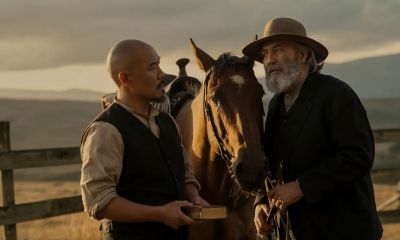
The first pair of brothers are Adam Trask and Charles, his half-brother. Christopher Abbott plays Adam, a soft-spoken man who trusts people far too easily. Mike Faist, seen in Challengers and West Side Story, takes the role of Charles, who is jealous and hot-tempered. Tracy Letts is Cyrus, their father, who clearly prefers one son, and neither of them is in any doubt about which.
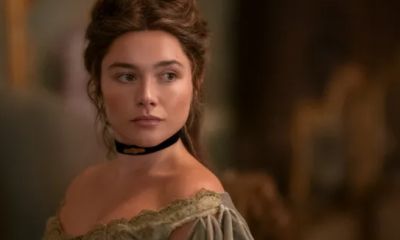
Into that already broken home walks Pugh's Cathy Ames. Her arrival pushes every old crack wider. Later, the story jumps forward to Adam's twin boys. Joseph Zada plays Cal, and Joe Anders plays Aron. One brother seems easy to love. The other feels he has to scrap for every bit of approval he gets. Cal, of course, is the part James Dean made famous, which is a heavy pair of shoes for any young actor.
Can anyone play Cathy?
Cathy is one of the great villains of American literature. Steinbeck writes her as cold and sharp, a woman who seems to have arrived in the world without a conscience. That makes her a trap for any actor. Push the evil too far and she becomes a cartoon. Try to explain her too much and the menace drains away.
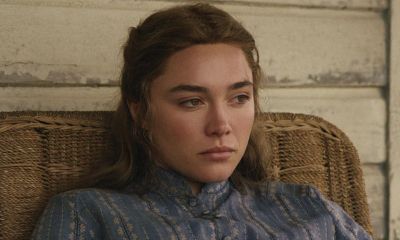
According to the critics, Pugh dodges both problems. Variety's Alison Herman wrote that the show "feels worth it for Pugh and Lee's standout efforts, which etch their characters deep into one's memory." Variety India went further and named it the best work of her career. Netflix itself calls Cathy an antihero, and that word hints at the approach. The series gives more room to the question of how Cathy became this person, but it never lets her off easy.
Pugh has played difficult, magnetic women before in Midsommar and Little Women. Cathy is a harder test than either. She also has a stake behind the camera as an executive producer, and she has been tied to it since 2022.
The quiet man at the center
Hoon Lee may be the show's secret weapon. He plays Lee, who cooks and keeps house for the Trask family and slowly proves to be the wisest voice in the whole saga. In the novel, Lee is Chinese American and uses broken English with strangers because that is what they expect from him. With people he trusts, he drops the act completely. It's one of the boldest ideas in the book, and it hands an actor a rich double role to play.
Critics have praised Lee nearly as much as Pugh. The headline of Variety's review called the pair "the beating heart" of the adaptation. His character also carries the book's central idea. Lee explains "timshel," a Hebrew word he renders in English as "thou mayest." The final episode takes its title, "Timshel," from that word, and that choice tells you how much the series leans on him.
Other faces in the valley
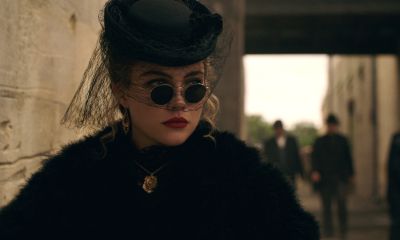
Samuel Hamilton, the kind Irish neighbor modeled on Steinbeck's grandfather, is played by Ciarán Hinds. Martha Plimpton is Faye, a brothel owner who ends up holding a major place in Cathy's life. Between Hinds, Letts and Abbott, the older generation is in very steady hands, and the twins take charge of the back half.
Who made it, and where?
Kazan is the writer, and she shares showrunner duties with Jeb Stuart. She has explained why the novel matters to her. She called Steinbeck's writing "personal, shocking, profound, and free," and said it has "kept me enthralled by East of Eden since I first read the book as a young teen."
Episodes one through four were directed by Garth Davis, who made Lion, and Laure de Clermont-Tonnerre took over for the last three.
Oddly enough, this very Californian story was shot in New Zealand. Filming ran between October 2024 and March 2025 around Auckland, plus South Island locations near Dunedin and Oamaru. That may sound like a strange swap, yet the broad valleys and the island's old towns make a convincing double for farm country in the early 1900s.
Grandfather versus granddaughter
The 1955 film lives on mostly because of James Dean. Because it covered only the Cal and Aron section, Cathy hardly shows up, and the entire history of Adam and Charles is gone. You lose the roots of the family curse that the twins inherit.
The new series runs the full course, from the brothers as young men through the twins growing up. Daniel Fienberg of The Hollywood Reporter was direct about the difference: "This, unlike the 1955 film, feels like it understands why East of Eden is a special text."
There's something a little poetic about a Kazan repairing a Kazan. It's also just practical. A two-hour movie could never hold this much story, while seven hours gives it room to breathe.
Love it or loathe it
Forbes reported that the show opened with an 89% Rotten Tomatoes score from 27 reviews on its first day. That edges past the 1955 movie's 86%.
The fans have been generous. At the AV Club, Hunter Ingram argued that "Kazan has built a towering new standard for what literary adaptations for TV could and should be." The Financial Times described an "opulent and persuasive adaptation."
The detractors are just as firm. Verne Gay at Newsday dismissed it as "a grim, gloomy, sodden slog." John Anderson of The Wall Street Journal complained that "it simply feels like Ms. Kazan ran out of daring." TV Guide liked it, yet still noted that it "never quite feels like a magnum opus on the same level as its source material."
Put together, the pattern is easy to read. Nearly everyone admires the acting, and the arguments are about the slow pace and the heavy, sad tone.
Is it your kind of show?
If you enjoy weighty literary drama, this is an easy recommendation. The series moves slowly and sits in sorrow for long stretches, but by most accounts the acting is excellent and the book is treated with respect. People who liked HBO's Mare of Easttown, Lonesome Dove or The Crown are likely to feel at home.
Anyone hoping for something brisk should look elsewhere. Newsday had a point about the gloom, since seven hours of relatives betraying one another in the early twentieth century can wear you down. You also don't need to have read the novel first, because the show works on its own terms. If it sends you hunting for a copy afterward, that's a good sign.
I'll admit the second half is what interests me most. Pugh owns the first stretch, by all reports. Steinbeck's real message, though, lives with Cal and the idea that he is not doomed to copy his father and uncle. I would judge the whole series on whether those last three episodes deliver that. Start with episode one, "Brothers," spread it over several nights, and listen closely when Lee gets to "thou mayest." Everything in the story hangs on those two words.
Pros
- Exceptional acting performances enhance character depth
- Masterful cinematography captures the beauty of the American landscape
- Rich thematic exploration of morality and redemption
- Intricate narrative that rewards thoughtful viewing
- Stellar score and sound design heighten the emotional experience
- Timeless portrayal of human struggles and societal context
Cons
- Pacing may feel slow for contemporary viewers
- Complex narrative can be challenging to follow
- Some dialogue and stylistic choices may seem dated to modern audiences
Screenshots