Danny Go! Review



Most screen time ends with a child glued to the sofa. Danny Go! ends with a child red in the face and asking for one more round. That flip is the whole pitch, and it explains why this little Charlotte project has gone from classroom smartboards to a Netflix deal.
The show is aimed at kids between 3 and 7. Its Netflix run began on April 6, 2026, with five episodes, and a second season followed in August for the families who had already played the first batch on repeat until the remote needed new batteries. If your house has a preschooler in it, the odds are good you've already heard the theme music through a wall.
Start with the problem it solves
Young kids have energy that has to go somewhere. Always. On a cold day or a wet one, when the park isn't an option and the furniture starts to look like a climbing frame, parents need a plan that doesn't involve another hour of quiet cartoons on the sofa. Parents and teachers have been reaching for Danny Go! for years as a pressure valve.
The outlet What's on Netflix put the goal plainly. The show is built to "get kids off the couch and burn energy." That line sums it up better than any marketing copy could. It isn't trying to teach phonics or count to ten. It wants bodies moving.
That focus is rarer than you'd think. A lot of children's programming asks kids to sit and absorb. This one asks them to stand up and follow along.
How a bar band became a kids' brand
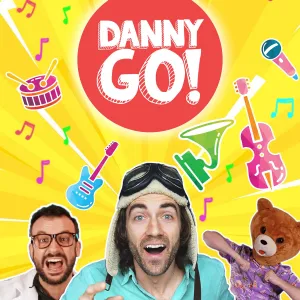
Danny is Daniel Coleman, a musician from Charlotte, North Carolina. He used to play in Campbell the Band, a group he shared with two friends from childhood, Michael Finster and Matthew Padgett, and in 2019 those two, plus Coleman's wife Mindy, sat down with him and built the YouTube channel that would take over so many classrooms. All of them still work on it today.
Wikipedia notes that the first spark came from Mister Rogers' Neighborhood. The team didn't stay on that path for long, though. The music videos grew much faster than anything else they tried, so they followed the audience. "The Wiggle Dance" was the breakout, and teachers began playing it to shake up restless classes.
The growth since then is hard to wrap your head around. By August 2026 the channel counted over 5.1 million subscribers and roughly 5.8 billion views in total. According to Netflix, the brand has also sold out 65 live shows and released one of the hottest toys of 2025. There's a picture-book series now as well, which kicked off this spring with Danny Go's Volcano Adventure.
So what happens in an episode?
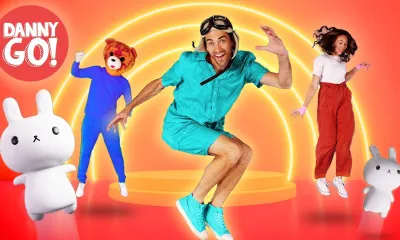
It's live action, and Danny speaks straight into the lens. He gives short commands a small child can act on right away. Dodge this. Stop still. Hop that way. The pace rarely slows. Loud colors, too.
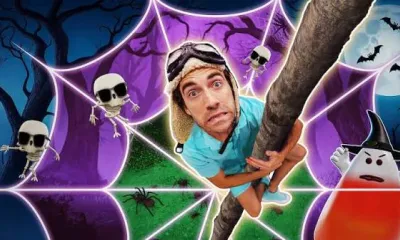
Each Netflix episode is a run of games and songs tied loosely to a theme. The titles read like a kid's wish list. In "Lava, Glowsticks, Tigers + MORE!" the floor turns to lava, glow sticks become drawing tools and tigers lurk nearby. "Gemstones, Volcanoes, Dinosaurs + MORE!" has kids hunting for gems and stomping around like a dinosaur. "Flamingos, Sharks, Colors + MORE!" blends animal games with color patterns, while "Superheroes, Trains, Robots + MORE!" leans into pretend play.
The fifth one is a little different. "The IMPOSSIBLE Challenge! - A Mini-Game Adventure" is set inside a Mini-Game Mansion. Kids help Danny clear level after level of quick games, a format that feels lifted from video games.
Longtime YouTube fans will spot a few old favorites folded in. The "'Ka-Pow!' Superhero Dance" shows up, and so does the adventure "Escape from Tiger Island!"
Episode length matters more than you'd guess
Most episodes sit somewhere between 25 and 30 minutes. For a parent, that's a sweet spot, because kids get enough time to properly wear themselves out while you still have the rest of the afternoon free for snacks, errands and whatever else the day throws at you.
The Mini-Game Mansion episode is the outlier at about 11 minutes. That makes it handy for a short reset, like the gap before dinner or a break between chores. Teachers know this trick already. The show grew up as a "brain break" tool, a few minutes of movement wedged between lessons, and the short games still fit that slot well.
The faces on screen
Netflix credits five people in the cast: Daniel Coleman, Michael Finster, Matthew Padgett, Mindy Coleman and Dominic Geralds. They swap between characters and helpers in the various games. Fans know them on sight.
The small crew gives the whole thing a homegrown feel. It plays like a bunch of friends putting on a backyard show, only now with proper lights and a real budget. That warmth is a big part of why it doesn't feel like a toy commercial.
A few practical warnings
This is not a wind-down show. Not even close. It's built to get kids hyped, so playing it right before bed is asking for trouble. Save it for the hours when you want noise and jumping.
You'll also want floor space. The entire point is movement, and a preschooler mid-leap does not mix well with a coffee table. Shove the furniture back before you press play.
Older kids may roll their eyes. The target range tops out at 7, and an 8 or 9 year old could find it too young. For a 3 year old, though, it lands right on target.
Content-wise there's nothing to worry about. It carries a TV-Y rating, and the episodes stick to songs, games and silliness.
Where it sits next to Ms. Rachel
Danny Go! is one of several YouTube creators Netflix has brought aboard. Ms. Rachel, the toddler teacher with a massive following, made the same move. Netflix has also teamed up with Mark Rober and Alan Chikin Chow.
The Ms. Rachel comparison is useful because the two shows are almost opposites. Hers is gentle and built around early language. His is loud and built around movement. Plenty of families keep both in rotation and simply pick one based on the mood in the house, so a slow, sleepy morning gets Ms. Rachel and a stir-crazy afternoon gets Danny and his lava games.
Parents who grew up on The Wiggles or Yo Gabba Gabba! will find the DNA familiar. There's the same music and goofiness, just with a fresher, game-like edge.
Is it worth adding to your queue?
For families with kids in the 3 to 7 range, the answer is an easy yes. It turns passive viewing into exercise, and the Netflix versions are longer and more polished than the YouTube clips that built the brand.
I'd argue the best thing about it is how little it overthinks the idea. Small kids want to move, and this show simply hands them permission. I would also suggest grown-ups stretch first, because the music has a way of pulling adults off the couch too.
If you're new to it, start with "Lava, Glowsticks, Tigers + MORE!" and clear a patch of floor. Then see who gets tired first. My money's on the adults.
Pros
- Innovative narrative structure that keeps viewers engaged.
- Exceptional cinematography with creative camera angles.
- Authentic character development and strong performances.
- Thought-provoking themes that encourage introspection.
- Accessible streaming options that enhance viewer convenience.
- Blend of humor and gravitas that adds emotional depth.
Cons
- Episodic storytelling may confuse viewers seeking a linear plot.
- Some segments might feel disjointed due to narrative experimentation.
- Limited appeal for those who prefer conventional, blockbuster cinema.
Screenshots